Working for non-governmental organizations (NGOs) can be very rewarding. It’s perfect for those who want to make a difference worldwide. But, finding the right NGO visa sponsorship can be tough.
If you’re looking for international NGO jobs, knowing how to get non-profit visa sponsorship is key. This guide will help you understand the process. It’s designed to help you make smart choices for your career.
Key Takeaways
- Understanding the basics of NGO visa sponsorship
- Exploring the benefits of working with NGOs
- Identifying the right fit for your career goals
- Navigating the application process for non-profit visa sponsorship
- Tips for securing international NGO jobs
Understanding NGO Visa Sponsorship
Visa sponsorship by NGOs helps international workers join global development projects. NGOs support visa applications, letting workers legally work abroad.
What is visa sponsorship?
Visa sponsorship means an NGO backs an individual’s visa application. They confirm the person’s legal work in a foreign country. This support helps deal with immigration laws.
Types of visas commonly sponsored by NGOs
NGOs sponsor different visas based on the job and employee’s skills.
H-1B visas for specialized workers
H-1B visas are for those with unique skills. NGOs often sponsor these for specific roles.
J-1 exchange visitor programs
J-1 visas support cultural exchange and professional growth. NGOs often sponsor J-1 visas for international projects.
Benefits of working with NGOs internationally
Working with NGOs abroad brings many benefits. You get to grow professionally, immerse yourself in different cultures, and help with important projects.
These experiences boost your career and help you understand the world better. They also give you valuable skills for a global job market.
Qualifying for NGO Sponsored Visas
To get an NGO-sponsored visa, you need to meet certain education, experience, and language skills. NGOs want people who have the right skills and share their mission and values.
Education Requirements
Most NGOs ask for a certain level of education. This can be a bachelor’s degree or higher, depending on the job. For example, some jobs need special degrees or certifications.
- A bachelor’s degree in a relevant field is often the minimum requirement.
- Advanced degrees or certifications can be advantageous for senior or specialized roles.
Experience and Skills in Demand
NGOs look for people with both technical skills and soft skills. Technical skills help you do your job well. Soft skills help you work well with others.
Technical Expertise NGOs Seek
The technical skills needed vary by NGO. For example, health NGOs need medical or public health knowledge.
- Project management skills are highly valued across various NGO roles.
- Technical skills relevant to the NGO’s operational areas are essential.
Soft Skills That Make Candidates Stand Out
Skills like teamwork, adaptability, and problem-solving are key. They help you work well in tough NGO environments.
“The best NGOs are not just looking for skill; they’re looking for heart and the ability to work in diverse, often difficult conditions.”
Language Proficiency Expectations
Being able to speak certain languages is important. English is often required, along with local languages where the NGO works.
Knowing these requirements can really help you get an NGO-sponsored visa. Focus on getting the right education, skills, and language skills. This way, you’ll be a strong candidate for NGO jobs.
How to Find NGOs That Offer Visa Sponsorship
Finding an NGO that offers visa sponsorship requires exploring different channels and using your professional network. Today, thanks to online platforms and networking, the search is easier.
Online platforms and job boards
Online job boards and specialized platforms are key to finding NGOs with visa sponsorship. These sites help a wide range of job seekers, including those looking for international NGO jobs.
Specialized international development job sites
Websites like Devex, ReliefWeb, and NGO Jobs are top choices for international development careers. They often list jobs with visa sponsorship details.
General job boards with NGO filters
Job boards like Indeed and LinkedIn Jobs let you filter for NGO jobs. Use keywords like “NGO visa sponsorship” to find relevant jobs.
Networking strategies
Networking is vital for finding NGO jobs, including those with visa sponsorship. Building connections with NGO professionals can offer valuable insights.
Leveraging LinkedIn and professional associations
LinkedIn is great for networking. Join groups related to international development and NGOs to find job openings and visa sponsorship opportunities.
Attending relevant conferences and events
Conferences and workshops on NGO work are great for networking. They attract professionals from various NGOs, some of which offer visa sponsorship.
NGO directories and databases
Using NGO directories and databases can help identify potential employers. These resources provide info on NGOs’ areas of work and hiring practices.
Direct outreach approaches
Directly contacting NGOs can be the most effective way to learn about visa sponsorship. Research NGOs that match your skills and interests, then reach out to their HR departments.
| Method | Description | Potential Outcome |
|---|---|---|
| Online Job Boards | Searching for NGO jobs on specialized and general job boards | Finding job listings that mention visa sponsorship |
| Networking | Leveraging LinkedIn, professional associations, and attending events | Discovering visa sponsorship opportunities through connections |
| NGO Directories | Using databases to identify NGOs and their hiring practices | Identifying potential NGOs that may offer visa sponsorship |
| Direct Outreach | Contacting NGOs directly to inquire about visa sponsorship | Receiving information on visa sponsorship policies directly from NGOs |
Top NGOs Known for Sponsoring International Workers
Working with top NGOs that sponsor international workers can be a life-changing experience. Many people want to help global causes. These organizations let them do so while gaining valuable experience.
Large international humanitarian organizations
These groups lead in global humanitarian efforts. They have programs to sponsor workers to tackle global challenges.
United Nations affiliated organizations
The United Nations, through agencies like UNICEF, UNHCR, and WFP, offers many opportunities. These agencies work on various humanitarian tasks worldwide.
International Red Cross and Red Crescent
The International Red Cross and Red Crescent Movement is key in humanitarian aid. They help in conflict zones, natural disasters, and crises. They often sponsor international staff for these tough environments.
Development-focused NGOs
Development-focused organizations aim for sustainable change in communities. They sponsor international workers to bring in needed skills and expertise.
Human rights and advocacy organizations
NGOs focused on human rights and advocacy fight for justice and equality. They sponsor international staff for issues like gender equality, freedom of speech, and refugee rights.
Environmental and conservation NGOs
Environmental and conservation groups are vital in fighting climate change and saving biodiversity. They sponsor workers for projects to protect the planet.
| NGO | Focus Area | Examples of Work |
|---|---|---|
| UNICEF | Children’s rights and welfare | Vaccination programs, education initiatives |
| International Red Cross | Humanitarian aid in crises | Disaster response, conflict zone assistance |
| World Wildlife Fund (WWF) | Conservation and environmental protection | Wildlife conservation, sustainable forest management |
These NGOs not only sponsor visas but also offer a chance to make a global impact. Whether you’re into humanitarian aid, development, human rights, or environmental conservation, there are many opportunities.
Navigating the Application Process
Getting a job in an NGO takes careful planning and preparation. To shine in the competitive field of NGO jobs, knowing the application process well is key.
Tailoring Your Resume for NGO Positions
A well-made resume is vital for a good first impression. For NGO jobs, your resume should show off relevant experience and skills that match the job.
Highlighting Relevant Experience
Show your experience in areas like project management, community development, or humanitarian aid. Use specific examples to show your impact in past roles.
Demonstrating Cultural Sensitivity
NGOs value cultural sensitivity and working in diverse settings. Show your experience working with different cultures or in multicultural teams. Mentioning your language skills is also a plus.
Writing Compelling Cover Letters
A good cover letter can really help your application. It should add to your resume by telling your story of motivation and qualifications.
Use the cover letter to share why you’re passionate about the NGO’s mission. Explain how your skills and experience make you a great fit for the role. Make sure to talk about the specific job requirements.
Preparing for Interviews with International Organizations
Getting ready for an NGO interview means researching the organization, practicing common questions, and being ready to talk about your experience and qualifications.
Common NGO Interview Questions
Be ready to answer questions about your experience in tough environments, your understanding of the NGO’s mission, and teamwork and collaboration.
Addressing Visa Sponsorship Tactfully
Be clear about your visa needs while showing your flexibility and willingness to follow necessary processes. Show your excitement for the role and confidence in your abilities.
| NGO Interview Tips | Description |
|---|---|
| Research the NGO | Understand the NGO’s mission, values, and current projects. |
| Practice Common Questions | Prepare answers to common NGO interview questions. |
| Highlight Cultural Sensitivity | Emphasize your ability to work in diverse cultural contexts. |
Understanding the Visa Sponsorship Timeline
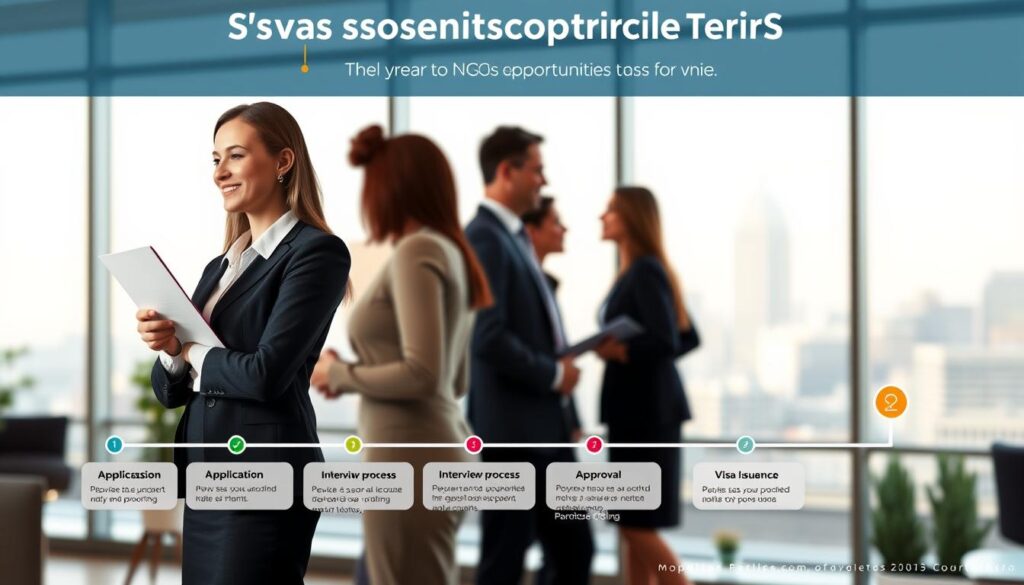
For international workers, knowing the visa sponsorship timeline is key. It shows the steps and times needed. The length of the process varies based on visa type and NGO procedures.
Typical Processing Times
Visa sponsorship times can be weeks or months. It’s important to plan early and know typical times for each visa. Some visas are processed in 30 days, while others take up to 6 months.
| Visa Type | Typical Processing Time |
|---|---|
| Work Visa | 2-4 months |
| Specialized Worker Visa | 3-6 months |
| Volunteer Visa | 1-3 months |
Documentation Requirements
To make the visa process smoother, gather all needed documents. This includes personal and professional ones.
Essential Personal Documents
Personal documents needed are a valid passport, birth certificate, and proof of address. Make sure these are current and valid.
Professional Credentials and Verification
Professional documents like diplomas and letters of recommendation are also needed. Authorities may verify these credentials.
Common Delays and How to Avoid Them
Delays can happen due to missing documents, background check issues, or medical exams. To avoid these, submit all documents correctly and be ready for checks and exams.
Understanding the visa timeline and being prepared helps international workers. It makes the process smoother and reduces delays.
Evaluating NGO Opportunities Beyond the Visa
Looking at an NGO job means more than just getting a visa. You need to think about many things that affect your career and happiness.
Assessing Organizational Culture and Values
It’s key to know the NGO’s culture and values. They shape the work place and how happy you’ll be. Look into their mission, values, and how they work to see if they match your goals.
Compensation and Benefits Considerations
NGO jobs pay differently. You should know what benefits you’ll get.
Understanding International Salary Packages
International NGOs offer salaries that account for living costs, housing, and more. These benefits are based on where you’ll work.
Health Insurance and Retirement Benefits
Good health insurance and retirement plans are usually part of the deal. Make sure you know what’s covered and what you might have to pay for yourself.
Career Growth Potential
Think about how you can grow in your career. NGOs that help their staff develop can offer a rewarding career.
Work-Life Balance in Different NGO Environments
NGOs are different in how they work, affecting your life outside work. Some offer flexible hours or remote work. Others might need you to travel a lot or work in the field.
Considering these points will help you decide if an NGO job is right for you.
Preparing for Your International NGO Role
Getting ready for your international NGO role means understanding the local culture. Cultural adaptation is key to your success and happiness.
Cultural Adaptation Strategies
Adapting to a new culture takes openness, flexibility, and a desire to learn. Learning about local customs and values is a good start. Building relationships with local colleagues and community members helps too.
Practical Relocation Considerations
Relocating for an NGO job is more than just getting used to the culture. You need to plan for housing, finances, and more.
Housing and Living Arrangements
Looking into housing options early can make things easier. Many NGOs help find places to live.
Banking and Financial Planning
Knowing how to handle your money is important. Think about currency exchange and bank fees.
| Relocation Task | Tips for Success |
|---|---|
| Housing | Research neighborhoods, consider NGO recommendations |
| Banking | Understand local banking fees, currency exchange implications |
Building Support Networks Abroad
Having a support network in your new place is essential. This includes connecting with other expatriates, joining clubs, and staying in touch with loved ones.

Safety and Security Awareness
Knowing about safety and security in your host country is crucial. Stay updated, follow NGO advice, and take steps to protect yourself.
Conclusion: Finding Your Perfect NGO Sponsorship Match
Getting an NGO visa sponsorship is a big step towards a rewarding international career. Knowing about the different visas, meeting the requirements, and going through the application process can help you succeed. This way, you can boost your chances of NGO job success.
It’s key to find an NGO that fits your career dreams. Look into their culture, pay, and chances for growth. Use online tools, networking, and NGO lists to find jobs that match your skills and experience.
With the knowledge from this guide, you can go after your dream NGO job with confidence. Whether you’re interested in helping others, working on development projects, or protecting the environment, there’s an NGO for you. Start your journey to find the right NGO and make a real difference in your field.