For US citizens wanting to work abroad, finding the right work visa can be tough. Two main choices in Europe are the EU Blue Card and the national work visa. Both let you live and work in European countries, but they differ in who can apply, how to apply, and what benefits you get.
The EU Blue Card is for top professionals to work in many European countries. It’s easier to get and comes with many perks. A national work visa, however, is for a specific country. You need to apply for each country separately.
It’s important to know the differences between these two options. This article will explain both, helping US citizens decide which is best for their career abroad.
Key Takeaways
- The EU Blue Card is designed for highly skilled professionals.
- A national work visa is country-specific.
- Both options have different eligibility criteria.
- The application process varies significantly.
- Benefits differ for EU Blue Card and national work visa holders.
What You Need to Know About International Work Authorization
US citizens thinking about working abroad need to understand international work authorization. It’s about legal permissions to work in other countries. Knowing this is key to finding a job worldwide.
Work Visas as Gateway to Global Opportunities
Work visas open doors to jobs around the world. They let professionals get international experience and skills. Global companies look for people with experience abroad.
Getting a work visa means exploring new places, making professional contacts, and boosting your career.
Why Americans Should Understand Multiple Work Visa Systems
Americans should know about different work visa systems. Each country has its own rules. Knowing these systems helps US citizens plan their careers abroad.
For example, the EU Blue Card and national visas have different perks and limits. Understanding these helps you make the most of your global job search.
EU Blue Card Explained for American Professionals
The EU Blue Card is a great option for skilled workers. It lets non-EU citizens work in the EU with a job offer. It’s especially good for American professionals because of its benefits and the chance to work in different EU countries.
Purpose and Benefits of the EU Blue Card
The EU Blue Card aims to bring in skilled workers from outside the EU. It offers faster visa processing, the chance to work in many EU countries, and a way to get long-term residency. It also lets holders bring their families to Europe.
Which European Countries Accept the Blue Card
Not every EU country has the EU Blue Card. But, big economies like Germany, France, and Spain do. Here’s a quick look at these countries and what they need:
| Country | Minimum Salary Requirement | Processing Time |
|---|---|---|
| Germany | $53,000 | 1-3 months |
| France | $45,000 | 2-4 months |
| Spain | $40,000 | 1-2 months |
Industries and Professions in High Demand
The EU Blue Card is great for those in IT, engineering, and healthcare. These fields are short on skills in many EU countries. For example, software developers, data scientists, and nurses are needed a lot.
National Work Visas Across Different Countries
For American workers wanting to work abroad, knowing about national work visas is key. These visas let foreign workers work in a specific country. But, the rules can change a lot.
How National Work Permits Function
National work permits need a sponsor from the country where you want to work. The employer must show they can’t find a local for the job. It’s a complex process that requires careful navigation.
Popular Destination Countries for American Workers
Many American workers go to countries with strong economies and ties to the US. Canada, Australia, and the UK are favorites because of their easy visa processes and good living standards. An expert says, “The ease of getting a work visa makes a country more appealing to foreign talent.”
“The ease of obtaining a work visa can significantly impact a country’s attractiveness to foreign talent.” – International Labor Organization
Country-Specific Work Visa Categories
Each country has its own visa types based on its needs. For example, Germany’s skilled worker visa is for IT pros. Australia’s 457 visa was for businesses to bring in temporary workers, but it’s now replaced. Knowing these categories helps American workers find the right jobs.
Understanding national work visas helps American professionals make smart choices for their careers abroad.
The Key Difference Between EU Blue Card and National Work Visa
For American professionals thinking about working in Europe, knowing the difference between the EU Blue Card and national work visas is key. These two work authorizations have big differences, affecting your job and living situation in European countries.
Scope of Validity and Cross-Border Movement
The EU Blue Card lets you live and work in many EU countries, with some rules. On the other hand, national work visas are only for the country that issues them.
Cross-border movement is easier with the EU Blue Card. It lets you work in other EU countries after a while in the first country. But, national work visas need separate permits for each country.
Administrative Authorities and Governance
The EU Blue Card is managed by both EU and national authorities. But, national work visas are only handled by national immigration offices.
| Characteristics | EU Blue Card | National Work Visa |
|---|---|---|
| Scope of Validity | Multiple EU countries | Single issuing country |
| Cross-Border Movement | Facilitated | Limited |
| Administrative Authorities | EU and national | National |
Long-term Immigration Pathways
Both the EU Blue Card and national work visas can lead to permanent residency. But, the EU Blue Card is made to help you fit into the EU job market. It might make getting residency easier.
In short, knowing the differences between the EU Blue Card and national work visas is vital. It helps you make smart choices about working and living in Europe.
How to Determine Your Eligibility for Each Option
To find your way through the complex world of European work visas, start by checking if you qualify for the EU Blue Card or a national work visa. Knowing what each requires can make your application smoother.
Assessing Your Qualifications for the EU Blue Card
The EU Blue Card is for skilled workers. You’ll need a degree or five years of professional experience. Your job must be in demand, and you must have a job offer with a certain salary.
Meeting National Work Visa Requirements
National work visas have different needs based on the country. You’ll need a job offer and possibly a sponsor from your employer. The needed skills and experience vary, so check the country’s specific rules.
Strategies to Enhance Your Eligibility
To increase your chances, improve your skills in sought-after areas. Learning a local language can also help. Make sure your qualifications are recognized in the country you’re applying to.
| Eligibility Criteria | EU Blue Card | National Work Visa |
|---|---|---|
| Education/Experience | Higher education degree or 5+ years of experience | Varies by country |
| Job Offer | Required, with salary meeting minimum threshold | Required, with potential employer sponsorship |
| Language Skills | Not always required but beneficial | Often required, depending on the country |
Step-by-Step Guide to Applying for an EU Blue Card
To get an EU Blue Card, knowing the application steps is key. You’ll need to prepare your documents and go through the approval process.
Preparing Your Documentation Package
Start by getting your documents ready. Make sure you have a valid passport. You’ll also need to show your qualifications and work history. This includes diplomas, transcripts, and work contracts.
Don’t forget to include proof of health insurance that covers you in the country you’re moving to.

Submitting Your Application Correctly
With your documents ready, it’s time to apply. You can apply through the embassy or consulate, or online. Fill out the application form carefully and attach all needed documents.
Submitting a complete and correct application is key to avoid delays.
Navigating the Approval Process
After applying, you’ll have to wait. The approval time varies by country and application details. Keep track of your application status and be ready to provide more info if needed.
When your EU Blue Card is approved, you’ll be told. Then, you can move forward with your relocation plans.
How to Successfully Apply for National Work Visas
Getting a national work visa is a big step for those wanting to work abroad. It’s important to know the application process well. The path to getting a visa involves several key steps, each needing careful focus.
Finding Employment Sponsors Abroad
Finding a job sponsor abroad is the first step. Look for companies that offer work visas. Key industries like tech, healthcare, and finance often sponsor visas.
- Research companies and their visa policies.
- Customize your resume and cover letter for each job.
- Get ready for interviews by knowing the company’s needs.
Completing Country-Specific Application Forms
After getting a job offer, you need to fill out country-specific visa forms. These forms differ by country, so getting the right ones is crucial. Pay close attention to avoid mistakes.
- Get the right form from the embassy or consulate website.
- Fill out the form carefully, making sure all info matches your documents.
- Submit the form with the needed documents.
Attending Visa Interviews and Appointments
Many countries need you to go to a visa interview. This chance lets the officer check your application. Being prepared is essential for a good interview.
- Know your application and job offer well.
- Understand the visa’s rules and regulations.
- Be ready to give more documents if asked.
By following these steps and being well-prepared, you can boost your chances of getting a work visa. Knowing the specific needs and steps for your country is vital.
Managing Costs and Timeframes for International Work Authorization
Getting international work authorization involves costs and time. Knowing these is key for a smooth transition to work abroad.
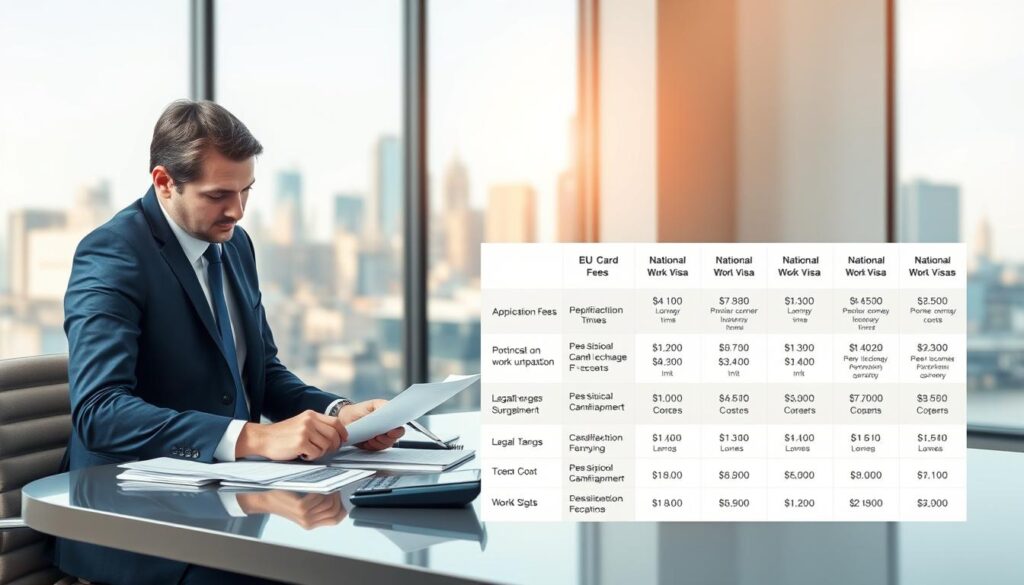
Budgeting for Application and Relocation Expenses
When you apply for a work visa, plan for application fees and relocation costs. Fees vary by country and visa type, from hundreds to thousands of dollars. Relocation expenses like housing, transport, and living costs are also important. Here are some key costs to include in your budget:
- Visa application fees
- Travel costs to and from the destination country
- Housing deposits and initial rent
- Health insurance
Planning Around Processing Times and Start Dates
It’s also important to plan for visa processing times and start dates. Processing times can range from weeks to months. Apply early to get your visa before your start date. Some countries offer expedited processing for an extra fee, which might be good if you’re in a hurry.
- Research the average processing time for your visa type
- Plan your application submission accordingly
- Consider the timing of your start date and any necessary adjustments
How to Maximize Benefits Under Each Visa Type
To get the most out of your EU Blue Card or national work visa, it’s key to know the benefits. Both offer unique perks that can make your international experience better.
Family Relocation and Spousal Work Rights
Both EU Blue Card and some national work visas let you move with your family. Family relocation rules differ, but they usually allow spouses and kids to join you. Plus, spousal work rights are often given, letting your spouse work without a separate permit. This improves your family’s life quality.
Accessing Healthcare and Social Benefits
Visa holders can usually get the host country’s healthcare and social benefits. EU Blue Card holders get public healthcare in EU countries. National work visas also offer healthcare, but it varies by country. Knowing these benefits helps with a smooth move.
Building Toward Permanent Residency or Citizenship
Both visas can lead to permanent residency or citizenship. By meeting certain residency needs and showing you fit in, you can apply for long-term status. This brings stability and more rights, like voting in some places.
To make the most of these benefits, understand your visa’s specific rules and chances. Using these perks can greatly improve your life abroad.
Conclusion
US citizens looking to work abroad need to know the difference between the EU Blue Card and national work visas. The EU Blue Card makes it easier for skilled workers to live and work in Europe. It offers benefits like easy travel between countries and a chance to stay long-term.
National work visas, on the other hand, are more specific to each country. Each country has its own rules and application process. While it might take more effort, these visas can offer special benefits like filling specific job needs and local perks.
Choosing between the EU Blue Card and a national work visa depends on your personal situation and career goals. The right visa can open up new career paths and improve your ability to work globally.
Success in an international career comes from making smart visa choices. Understanding the pros and cons of each option is key. With the right advice and planning, US citizens can overcome visa challenges and reach their career dreams.